


Succession: Who Runs Your ISO When You Step Back
The most common reason an ISO cannot be sold is not the multiple. It is that the buyer meets the business and finds you. This playbook names the three roles that must stop being you, gives five tests that prove they actually have, and lays out the 24-month runway that turns an exit into an option instead of a necessity.
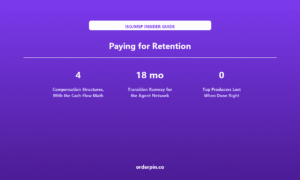
Compensation Design: Paying for Retention Without Breaking Cash Flow
Everyone agrees paying only on new deals is broken; almost nobody has designed the replacement. Four compensation structures calibrated to the same cost, the cash-flow arithmetic of each, and an eighteen-month transition that converts a 1099 network without losing the producers worth keeping.
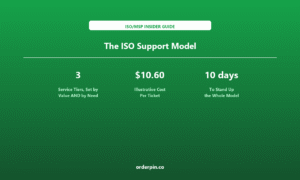
The ISO Support Model: Tiering, Escalation, and Cost per Ticket
Support is the largest unmeasured cost in most ISOs, and the reason it goes unmeasured is that it has no unit price. This playbook gives a two-axis merchant tiering model, four escalation rules that stop everything ending at the owner, the cost-per-ticket calculation with fully loaded inputs, and a ten-day plan to stand the whole thing up.

The Merchant Onboarding SLA: Define It, Measure It, Hit It
Onboarding is where first-year churn is decided, yet almost no ISO puts a clock on it. This playbook gives the five milestones that deserve a target, realistic day counts by merchant type, the achievement-rate metric that survives contact with reality, and a fourteen-day build plan with owners and done-criteria for every step.
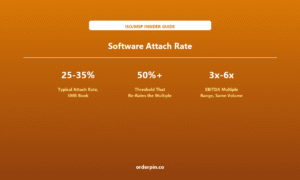
Software Attach Rate: The Metric Behind the 3x vs 6x Valuation Gap
Two ISOs with identical processing volume can be valued at 3x and 6x EBITDA. The difference is software attach rate – the share of active merchants paying for software every month. This benchmark gives attach rate by portfolio size and vertical, the thresholds where a multiple re-rates, and the 90-day plan that moves it fifteen points.
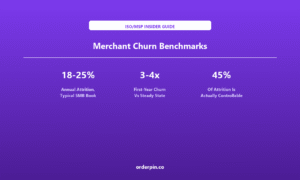
Merchant Churn Benchmarks: Normal Attrition by Vertical and Tenure
Most ISOs manage churn against a feeling instead of a number. This benchmark gives annualized merchant attrition by vertical and by tenure, explains why first-year churn runs 3-4x steady state, and shows the cohort view that tells you whether churn is a sales problem or an onboarding problem – plus what each point of attrition costs.