
Help readers quickly understand the competitive landscape of white-label POS systems available to small businesses in 2026, with a focus on platforms that enable rapid branding, seamless integration, and operational scalability. Prioritize clarity and practical summary, positioning the rest of the article as a comprehensive comparison guide.
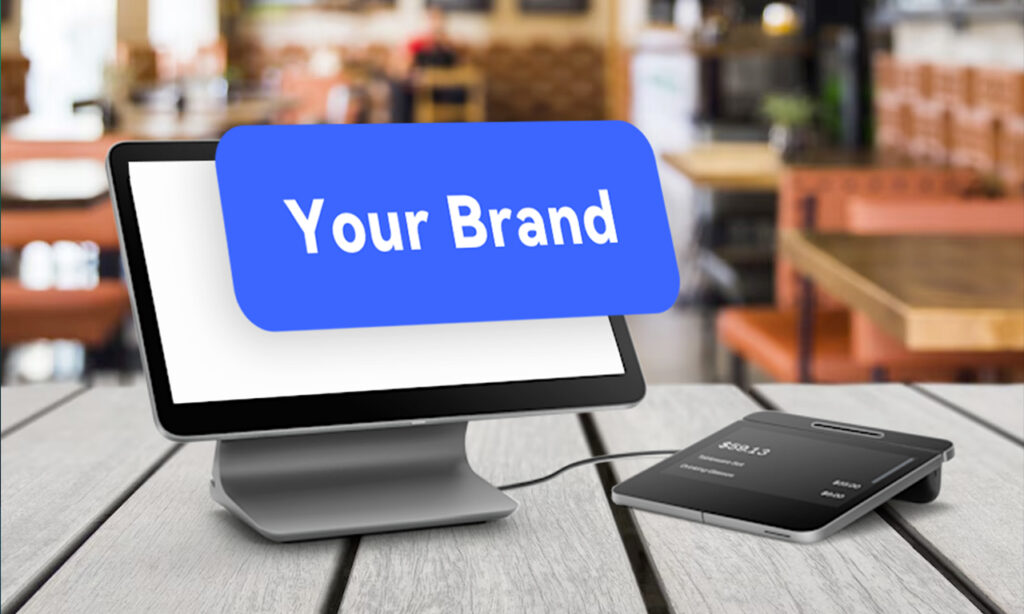
Briefly explain what a white-label POS platform is: a point-of-sale system designed for rebranding by resellers, agencies, or partners, offering full ownership of merchant relationships while leveraging third-party technical infrastructure.
Emphasize why choosing the right white-label POS is critical for SMBs seeking growth, brand control, and reduced technical overhead.
Include a short list or table previewing the seven solutions covered in the article, noting their primary strengths (e.g., onboarding, omnichannel, payment speed) and hint at the feature breakdown to come.
Naturally include secondary keywords such as ‘reseller-focused POS,’ ‘omnichannel integrations,’ and ‘total cost of ownership.’
OrderPin: White-Label POS Built for Restaurants and SMB Growth
Establish OrderPin’s core value proposition as an operator-first, partner-focused white-label POS offering tailored for restaurants and growth-driven SMBs. Clarify why OrderPin stands out for both operators and resellers.
Highlight key benefits: operator-first design, extensive third-party integrations, remote troubleshooting, and robust features (dual pricing, multi-currency, surcharges).
Define ‘white-label POS’: a software solution that allows partners to offer branded POS without incurring software development and R&D costs, speeding time to market and improving margin control [1].
Stress OrderPin’s support for omnichannel workflows (e.g., online ordering, inventory, analytics) and unique ease of onboarding for ISOs/merchant service providers.
Mention measurable outcomes—labor savings, increased sales, ROI clarity—and invite readers to book a demo or consult an OrderPin expert.
Quantic POS: Reseller-Focused Platform with Robust Onboarding
Explain how Quantic POS leads as a reseller-centric platform, excelling at fast onboarding, secure migration, and branding customization.
Summarize Quantic’s features: secure onboarding portals, automated migration tools for legacy POS transitions, customizable workflows for different industries [2].
Outline industry modules, vertical-specific feature sets, and omni-channel integrations (e.g., eCommerce, kiosks, KDS).
Note Quantic’s ability to enable partners to control their own pricing and margins, a core advantage of white-label POS [2].
Advise when to choose Quantic: when deep reseller support and onboarding automation are essential.
ConnectPOS: Omnichannel Inventory and Real-Time Sync for Retail
Clarify how ConnectPOS stands out for retail brands needing unified online/offline inventory control and deep white-label customization.
Call out the omnichannel inventory and real-time synchronization as major differentiators for small retailers managing multi-channel sales [3].
Highlight ConnectPOS’s flexible branding capabilities—from interface to backend feature extensions.
Suggest ConnectPOS is ideal for brands requiring close eCommerce-POS sync and those prioritizing API-based extensibility.
AireusPOS: Modern Workflows with Multi-Location Reporting
Outline AireusPOS’s strengths in modernizing restaurant and retail workflows, especially for businesses with multiple locations.
Explain features: cloud-based access, real-time inventory management, multi-location reporting, and staff/role-based access controls [4].
Emphasize branded outputs—receipts, checkout experiences—that amplify client professionalism and elevate brand experience.
Position AireusPOS as a fit for fast-growing businesses needing robust, multi-unit oversight and cloud-first reliability.
BuildFire: Mobile-First White-Label App Builder for POS
Showcase BuildFire as the go-to for branded, mobile-first POS applications.
Define ‘white-label app builder’: cloud software agencies use to create branded mobile POS apps for Android/iOS at scale, with minimal coding.
Detail how BuildFire supports quick deployment of mobile POS experiences, enabling resellers and agencies to meet diverse client needs.
Suggest use cases: mobile food trucks, pop-up shops, and events where app-based checkout is key.
Zoho: Enterprise-Grade Extensible White-Label Suites
Describe Zoho’s white-label suite as a powerful option for partners needing enterprise capability and deep back-office/toolchain integration.
Highlight CRM, analytics, and extensible modules for businesses wanting more than basic POS—especially larger SMBs or resellers targeting multi-service integration.
Note Zoho’s strength in API connectivity and workflow automation, appealing to advanced partners or ISOs.
Define ‘white-label suite’ as a bundle of business-critical tools that can be fully rebranded and managed under a partner’s identity.
Epos Now: Easy Setup with Transparent Pricing for Small Businesses
Position Epos Now as an accessible, user-friendly POS with clear pricing, designed for small business ease.
Reference Epos Now’s industry reputation for straightforward onboarding and setup [5].
Note transparent pricing as a decision driver for SMBs watching total cost of ownership and recurring expenses.
Suggest scenarios where speed to launch and low technical hurdle are top priorities.
Gulf Management Systems: Payment-Focused POS with Fast Transactions
Summarize Gulf Management Systems’ specialization in payment processing speed and secure, transaction-driven POS capabilities.
List standout features: fast credit card processing, real-time sales reporting, PCI compliance, and advanced transaction security [6].
Emphasize the platform’s applicability for merchants prioritizing payment throughput and financial reporting.
Advise readers to weigh payment speed and transaction transparency when evaluating platforms.
How to Choose the Right White-Label POS for Your Small Business
Empower small business readers to make a confident, strategic choice by evaluating business needs and POS capabilities.
Break down a 5-step decision process: 1) Prioritize branding/customization, 2) Assess inventory & omni-channel features, 3) Review onboarding and reseller portals, 4) Compare vertical modules, 5) Calculate margins and migration costs [1].
Present a buying checklist or table comparing top options on these criteria for clarity.
Remind SMBs to test migration/onboarding flows, validate total cost (software, transactions, hardware), and require clear SLA/support commitments.
Frequently Asked Questions About White-Label POS Solutions
What key features should small businesses look for in white-label POS?
Essential features include customizable branding, secure payments, real-time inventory tracking, robust reporting, and the ability to integrate with both online and offline sales channels.
How do pricing models typically affect total cost of ownership?
Pricing models often include monthly software fees, transaction costs, and hardware expenses; understanding these up front helps small businesses accurately predict their total long-term investment.
What industries benefit most from white-label POS platforms?
Industries like restaurants, retail, hospitality, and services see the greatest advantage from white-label POS platforms, especially when needing industry-specific workflows and custom branding.
How important is onboarding and reseller support for success?
Strong onboarding and reseller support simplify complicated transitions, accelerate go-live timelines, and reduce long-term operational headaches for both merchants and partners.
What hardware options are compatible with white-label POS systems?
Most white-label POS systems work with common devices like iPads, smartphones, card readers, and receipt printers, offering flexibility for different business setups.
References & Links
Internal Link Candidates (sorted by relevance)
- https://www.orderpin.co/white-label-pos-software/
- https://www.orderpin.co/category/white-label-pos/
- https://www.orderpin.co/white-label-pos-market-trends-are-growing-rapidly/
- https://www.orderpin.co/best-practices-for-deploying-white-label-pos-solutions-for-restaurants/
- https://www.orderpin.co/how-ai-powered-white-label-pos-systems-revolutionize-small-business-success/
- https://www.orderpin.co/case-studies-success-stories-of-businesses-using-white-label-pos-systems/
- https://www.orderpin.co/white-label/ https://www.orderpin.co/hardware/ https://www.orderpin.co/partnership/
External references
[1] getquantic.com. Choose White Label POS Software. https://getquantic.com/choose-white-label-pos-software/
[2] getquantic.com. White Label POS Features. https://getquantic.com/white-label-pos-features/
[3] connectpos.com. White Label Software Companies. https://www.connectpos.com/white-label-software-companies/
[4] aireuspos.com. Best Label POS System Providers. https://aireuspos.com/best-label-pos-system-providers/
[5] fooddocs.com. Best POS Software. https://www.fooddocs.com/post/best-pos-software/
[6] gulfmanagementsystems.com. The Best POS System Features in 2026. https://gulfmanagementsystems.com/2026/03/04/the-best-pos-system-features-in-2026/
[7] logo.com. Best POS. https://logo.com/guides/best-pos