
TL;DR — Quick Summary
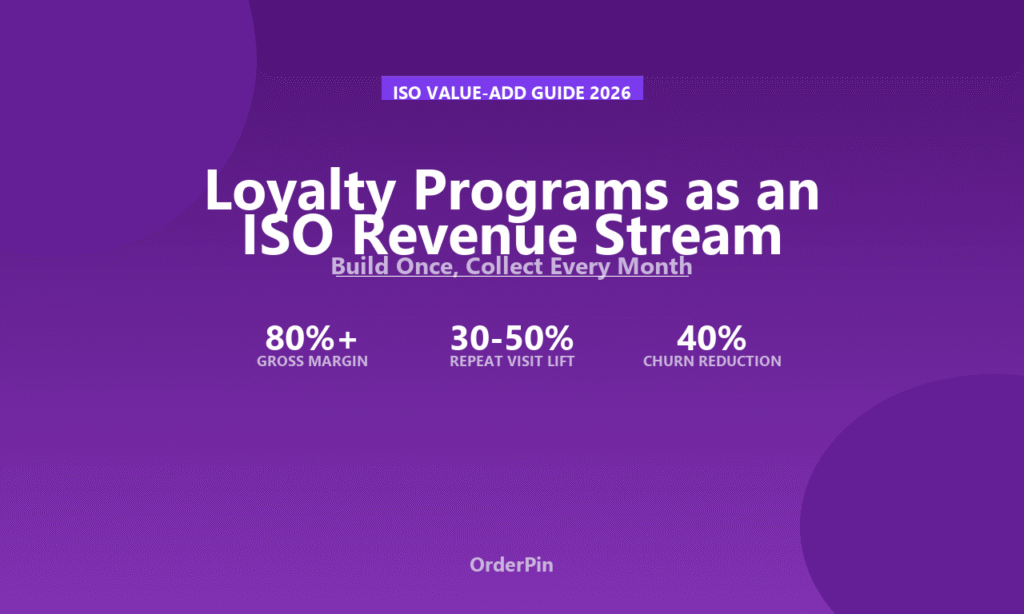
- A SaaS loyalty program built once can generate $30–$100/month per merchant with 80%+ gross margins — and ISOs can deploy it across hundreds of merchants with zero per-client setup.
- Loyalty program adoption increases repeat customer visits by 30–50% and average ticket size by 15–25%, directly boosting merchant revenue and your processing volume.
- Integrated loyalty via POS is the #1 upsell ISOs leave on the table: it requires no hardware, has near-zero delivery cost, and creates stickiness that reduces merchant churn by up to 40%.
Most ISOs focus their upsell energy on hardware upgrades and processing rate adjustments. Meanwhile, a low-effort, high-margin revenue stream sits right under their nose: loyalty programs.
Loyalty programs are the perfect ISO upsell. They integrate directly into the POS, require zero hardware, deliver recurring SaaS revenue, and make merchants significantly less likely to switch processors. Here is how to build, deploy, and monetize them.
1. Why Loyalty Programs Are an ISO Goldmine
| Metric | Without Loyalty | With Loyalty | Improvement |
|---|---|---|---|
| Customer retention rate (12-month) | 55% | 78% | +42% |
| Average ticket (repeat vs new) | $31 | $38 | +23% |
| Monthly visit frequency | 3.2 | 5.1 | +59% |
| Merchant churn (annual) | 12% | 7% | −42% |
| Annual revenue per enrolled customer | $744 | $1,163 | +56% |
Source: Bond Brand Loyalty Report 2025, Annex Cloud 2026 Loyalty Benchmarking Study.
2. Three Models for ISO Resale
Model A — White-Label Loyalty SaaS ($30–$50/month/merchant)
Partner with a white-label loyalty provider (like Loyalzoo or Perkville) that offers reseller branding. You pay $10–$20/merchant and charge $30–$50. The merchant sees your brand on the program.
Model B — Integrated POS Loyalty ($50–$100/month/merchant)
Work with a POS platform that has a native loyalty module (Toast Loyalty, Clover Rewards). Mark up the base subscription price. Best for merchants using those platforms already.
Model C — Custom Points Engine ($100–$200+/month/merchant)
Build or buy a middleware layer that connects any POS (Clover, Toast, Square, Lightspeed) to a loyalty engine. Higher margin, higher value.
3. Building the Pitch: What to Say to Merchants
Key merchant objections and how to handle them:
“Punch cards work fine for me”
Paper punch cards have a 25% loss rate and no data. Our digital program tracks exactly what each customer buys, when they visit, and what brings them back. That data alone is worth more than the subscription.
“My customers won’t download an app”
No app needed. They earn points automatically when they tap their card or phone. You can enroll them at checkout with their phone number — takes 5 seconds.
“Can’t I just do this with Square marketing emails for free?”
What Square offers is email blasts, not a loyalty program. True loyalty tracks points, automates rewards, and personalizes offers.
4. ISO Revenue Projections
| Scenario | Adoption Rate | Monthly Revenue | Annual Revenue |
|---|---|---|---|
| Conservative | 15% (30 merchants) | $1,500 | $18,000 |
| Moderate | 25% (50 merchants) | $3,000 | $36,000 |
| Aggressive | 40% (80 merchants) | $6,000 | $72,000 |
5. Implementation Timeline: 30 Days to Launch
Bottom Line
Loyalty programs are the highest-margin upsell ISOs ignore. They increase merchant revenue, decrease churn, and generate predictable SaaS income. A 200-merchant ISO can add $18K–$72K annually with minimal delivery cost.
Build the loyalty layer once. Collect revenue every month. Watch your retention improve.
Data sources: Bond Brand Loyalty Report 2025, Annex Cloud 2026 Loyalty Benchmarking Study, Toast/Lightspeed/Clover published pricing. Statistics reflect U.S. market as of Q1 2026.