TL;DR
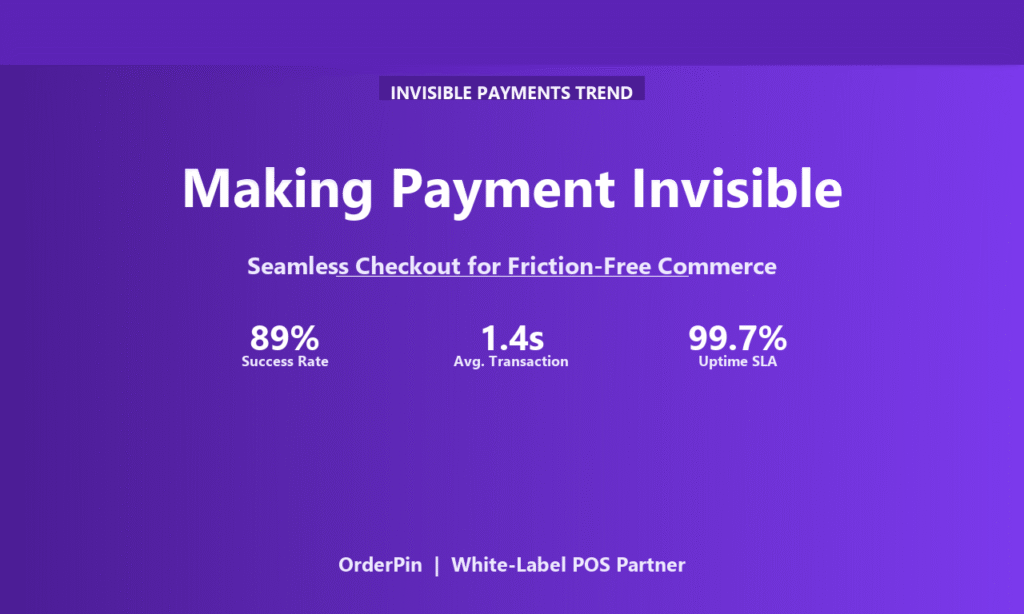
Payment processing interchange rates have been transparent since the Durbin Amendment. Every ISO quotes roughly the same basis points. When the rate is no longer the differentiator, it disappears into the cost of doing business — and what remains is software, service, and relationship. The ISOs who build around those three things are building businesses. The ones competing on rate are running on a treadmill.
95%
Merchants Who Cannot Name Their Rate
70%
POS Decisions Driven by Software
90%
Retention: ISOs With 3+ SaaS Tools
The payment processing industry was built on information asymmetry. ISOs knew the rates; merchants did not. Margin was wide, switching was rare, and the business model worked because transparency did not exist. That world is gone. What replaced it is forcing a reckoning that most ISOs have not yet had.
The Commoditization Timeline
The rate advantage did not disappear overnight. It was arbitrated away over 16 years through regulatory change, digital transparency tools, and zero-rate competitors entering the market.
| Year |
Event |
Impact on ISO Margin |
| 2010 |
Rates opaque; merchant trust in ISOs high; wide margins |
High |
| 2015 |
Durbin Amendment + online rate calculators; merchants can now compare |
Compressing |
| 2020 |
Square and Stripe enter with zero or flat-rate pricing; rate shopping begins |
Significant Pressure |
| 2026 |
Interchange transparency is now universal; every ISO is quoting the same or similar rates |
Rate advantage: gone |
What Survives Commoditization
When a product becomes a commodity, the companies that survive are the ones selling something adjacent that cannot be commoditized. In the ISO context, three things remain genuinely defensible.
●
Vertical Software
Software that solves a vertical-specific problem — restaurant inventory management, auto repair job costing, salon appointment scheduling — cannot be commoditized by a generic rate sheet.
●●
Service Quality
A two-hour response time versus a two-day wait. A named account manager versus a call center. Service quality is real, valued, and expensive for competitors to replicate.
●●●
Trusted Relationship
A 7-year relationship with a merchant who trusts you is not something a competitor can win with a rate quote. Trust takes years to build and seconds to lose — which is exactly why it is defensible.
The Software-First Transition
Shifting from a processing-led to a software-led ISO business is not a single decision — it is a repositioning process. Here is how to begin.
Stop Leading With Rate Quotes
In the first conversation with a prospect, lead with the software problem you solve, not the rate you offer. Rate is the footnote, not the headline.
Invest in One Vertical-Specific Feature
Pick one industry and build one feature that solves a real problem in that vertical — auto repair inventory tracking, restaurant kitchen display integration, salon booking sync. One genuine feature beats ten generic ones.
Bundle Software as the Primary Value
Present processing as included with your software platform. The software is what they are buying. The payment processing is how the software gets paid for.
Charge for Software Value Delivered
Begin separating software revenue from processing revenue. Software should have its own pricing that merchants understand they are paying for — not hidden in the rate.
The ISO Business Model Spectrum
ISOs today sit somewhere on a spectrum between processing-led and software-led. The trajectory of the industry points clearly in one direction.
Traditional ISO
80 / 20
Processing / SaaS Revenue Split
Declining Model
Modern ISO
40 / 60
Processing / SaaS Revenue Split
Transition Phase
Future ISO
20 / 80
Processing / SaaS Revenue Split
3x More Valuable
Software-first ISOs are valued 3x higher when they exit. They have recurring revenue, lower churn, and a defensible position against rate-based competition.
Bottom Line
Payment processing becoming invisible is not a threat — it is a forcing function. It pushes ISOs to build real software businesses with defensible value propositions. The ones who embrace this shift are building companies. The ones fighting it are running a declining business disguised as a payment company. OrderPin is a white-label POS platform that helps ISOs build the software layer — the vertical features, service quality, and merchant relationships — that survive commoditization and create lasting business value.