
B2B and Accounts Receivable: The Volume You Never Touch
You boarded the B2B merchant but never touched most of their cash flow. Why a percentage card fee cannot reach a $7,810 invoice, the workflow-based unit economics of attaching AR, and a 30-day path to put the ledger on your statement.
Agentic Commerce Readiness: What ISOs Must Build
AI agents are already shopping, but the readiness gap is not consumer-facing: it is catalogue, pricing and reconciliation data most merchants never maintained. The four data foundations an ISO must build, the three positions it can take, and why whoever holds the product data owns the new distribution channel.
Stablecoins and the GENIUS Act: Decide Before January 2027
On 18 January 2027 the GENIUS Act framework takes effect, and the question for an ISO stops being whether stablecoins matter and becomes who charges the fee when a merchant accepts one. The dates that bind you, what the rule actually changes, the three positions you can take, and the decision checklist to run in the next 67 days.
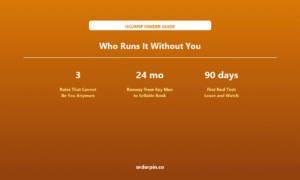
Succession: Who Runs Your ISO When You Step Back
The most common reason an ISO cannot be sold is not the multiple. It is that the buyer meets the business and finds you. This playbook names the three roles that must stop being you, gives five tests that prove they actually have, and lays out the 24-month runway that turns an exit into an option instead of a necessity.
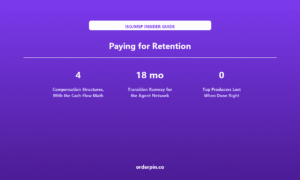
Compensation Design: Paying for Retention Without Breaking Cash Flow
Everyone agrees paying only on new deals is broken; almost nobody has designed the replacement. Four compensation structures calibrated to the same cost, the cash-flow arithmetic of each, and an eighteen-month transition that converts a 1099 network without losing the producers worth keeping.
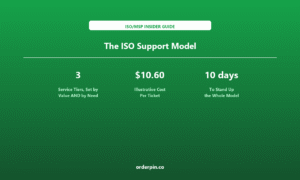
The ISO Support Model: Tiering, Escalation, and Cost per Ticket
Support is the largest unmeasured cost in most ISOs, and the reason it goes unmeasured is that it has no unit price. This playbook gives a two-axis merchant tiering model, four escalation rules that stop everything ending at the owner, the cost-per-ticket calculation with fully loaded inputs, and a ten-day plan to stand the whole thing up.