
TL;DR — Quick Summary
- The skills gap between traditional ISOs and technology-native ISOs is widening fast. The best ISOs in 2026 are led by people who understand software, data, and platform economics — not just processing.
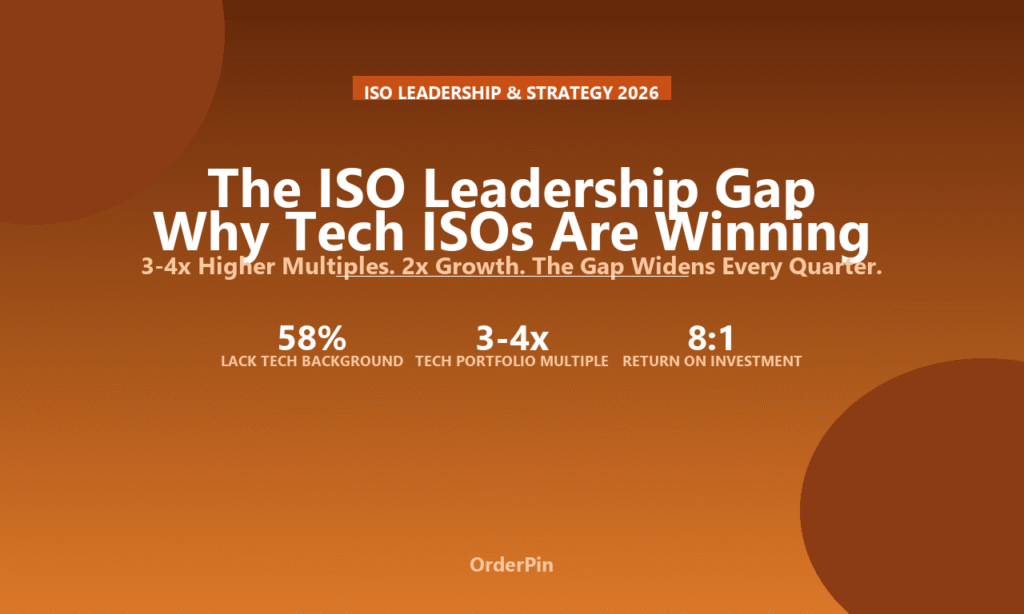
- Portfolios built by technology ISOs command 3-4x higher acquisition multiples because they include SaaS revenue, integrated data, and sticky software layers.
- Bridging the leadership gap is the single highest-ROI move an ISO owner can make in 2026 — every dollar invested in technology leadership returns an estimated $8 in portfolio value.
Walk into any ISO conference in 2026 and you will see two distinct groups. One group talks about residual splits, agent commission structures, and terminal lease programs. The other talks about API integrations, data lakes, and SaaS retention curves.
These two groups operate in the same industry, but they are no longer competitors. The technology ISOs have pulled ahead — and the gap is widening every quarter.
1. The Leadership Gap by the Numbers
The skills gap between traditional and technology-native ISO leaders is not anecdotal. Industry data shows a clear divergence:
| Dimension | Traditional ISO Leader | Tech-Native ISO Leader |
|---|---|---|
| Background | Sales, banking, processing | SaaS, fintech, engineering |
| Revenue model | Transaction residuals (85%) | SaaS + residuals (60/40) |
| Merchant stickiness | Terminal lock-in (3yr contract) | Software ecosystem (8yr avg life) |
| Portfolio multiple (exit) | 1.5–2.5x | 3.5–5.0x |
| Annual churn | 15–22% | 5–10% |
| Revenue per merchant | $480/yr | $1,240/yr |
2. Why Tech ISOs Are Winning
The advantages of technology-native leadership compound over time. Here is why the gap keeps widening:
Compounding Advantage 1: Data Feedback Loop
Tech ISOs capture transaction data, POS data, and customer behavior data. This data informs better merchant recommendations, which drives better results, which attracts more merchants, which produces more data. Traditional ISOs have no data flywheel.
Compounding Advantage 2: Software Margins
Software subscriptions carry 75-90% gross margins. Once a POS platform is built, the marginal cost of adding one more merchant approaches zero. Traditional processing margins (18-30 bps) are a fraction of that and keep declining.
Compounding Advantage 3: Talent Magnet
The best talent in 2026 wants to work on interesting technology problems, not terminal leases. Tech-native ISOs attract engineers, product managers, and data scientists. Traditional ISOs attract salespeople. Guess which group builds more valuable companies.
3. The Hidden Cost of the Leadership Gap
The leadership gap is not just about lower revenue — it represents a hidden cost that most traditional ISO owners do not quantify:
- Opportunity cost of unsold SaaS — Every merchant that only pays processing fees represents $500-800/yr in unrealized SaaS revenue
- Portfolio value discount — A pure-processing portfolio sells for 1.5-2.5x ARR vs. 3.5-5.0x for a tech-integrated portfolio
- Higher churn from shallow relationships — Rate-based relationships churn at 3x the rate of software-based relationships
- Lost growth capital — Tech-native ISOs attract VC/PE investment at 2-3x higher valuations, giving them cheaper growth capital
The Math:
A traditional ISO with 1,000 merchants generating $480K/yr in revenue and a 2x portfolio multiple is worth $960K. If that same portfolio were tech-integrated ($1,240/merchant, 4x multiple), it would be worth $4.96M. The leadership gap costs this ISO owner $4M in portfolio value.
4. How to Bridge the Leadership Gap
- Hire a CTO or technology partner — If you cannot build technology yourself, bring in someone who can. Give them equity and real decision-making authority
- Audit your tech stack — List every system you use (CRM, reporting, onboarding, merchant portal). Ask: “Is this best-in-class or legacy?” Commit to upgrading two systems per quarter
- Add one software layer — Pick one SaaS product (loyalty, analytics, online ordering) and resell it to 50% of your book within 6 months. This alone can add $250-400K to your annual revenue
- Build a data practice — Start tracking merchant-level profitability, churn predictors, and upsell triggers. Data-driven ISOs grow 2x faster than intuition-driven ones
- Start attending different conferences — Go to SaaS, fintech, and technology events. The people you meet there will change how you think about your business
5. The Cost of Waiting
Every quarter you delay bridging the leadership gap, the distance to technology-native ISOs grows wider. They are building data moats, software ecosystems, and brand equity that become harder to overcome with each passing month.
The good news: the gap is bridgeable. Unlike competing on distribution scale (which takes years of agent recruiting), the technology gap can be closed with targeted investments in talent, software partnerships, and data infrastructure.
Bottom Line
The ISO industry is splitting into two tiers. Tier 1 ISOs are driven by technology leaders who build software moats, data advantages, and platform value. Tier 2 ISOs are driven by sales leaders who compete on rate compression and terminal subsidies.
The gap between these tiers is not a death sentence — it is an investment opportunity. Every dollar spent on technology leadership today returns multiple dollars in portfolio value when it is time to exit. The question is not whether you can afford to bridge the gap. It is whether you can afford not to.
Data sources: The Strawhecker Group (TSG) ISO Benchmarks 2025-2026, McKinsey Fintech Leadership Report 2025, Bond Brand Loyalty Merchant Study 2025, Dealroom portfolio valuation analysis 2025. All figures reflect U.S. market.