
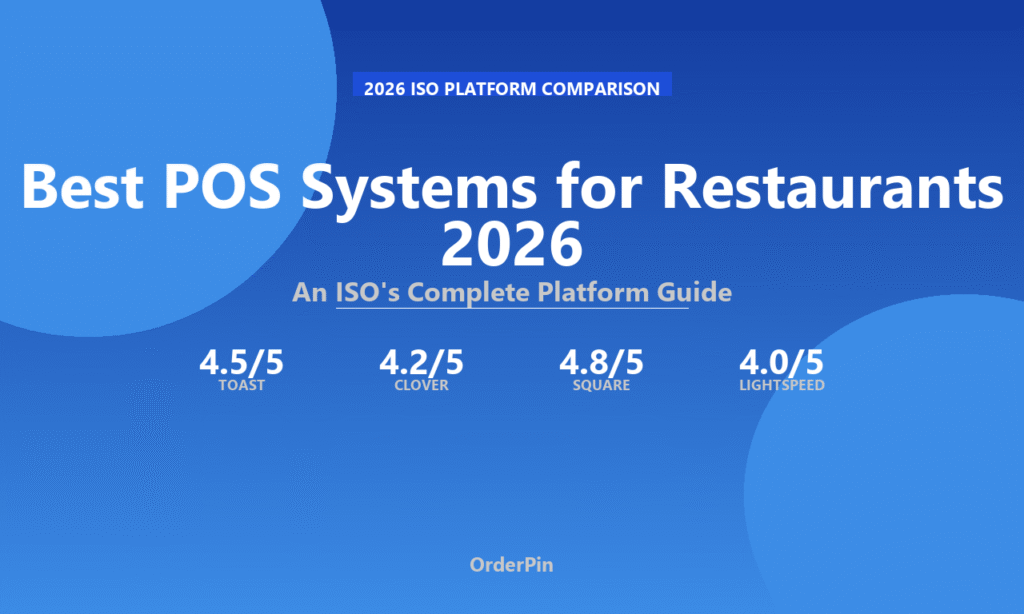
TL;DR — Quick Summary
- Toast, Clover, Square for Restaurants, Lightspeed, and Upserve dominate the U.S. restaurant POS market — each optimized for different segments from food trucks to fine dining.
- ISOs who understand the specific strengths and weaknesses of each platform can match merchants to the right system, dramatically reducing churn and increasing referral business.
- No platform wins on every dimension. The “best” POS depends entirely on the restaurant’s size, service style, menu complexity, and growth plans.
Every restaurant owner asks the same question: “What is the best POS system?” And every ISO knows there is no single answer. The best POS for a high-volume fast-casual chain is completely different from a fine dining restaurant with complex tasting menus. This guide breaks down the top five platforms through an ISO’s eyes — including real data on pricing, merchant satisfaction, and where ISOs make the most margin.
1. Toast POS — Best for Full-Service Restaurants
Toast is the dominant player in U.S. full-service restaurants, with over 85,000 restaurant locations as of 2025. It was built specifically for food service — not retrofitted from retail — which shows in the details.
| Metric | Toast Details |
|---|---|
| Pricing | $0 hardware + processing fees; software add-ons $60–$132/location/month |
| Processing Rate | 2.49% + $0.15 per transaction (card-present); 3.49% + $0.15 (online) |
| Best For | Full-service, table-service, casual dining, bars |
| Key Strength | Native kitchen display system (KDS), server tracking, split-check, tip pooling |
| Main Weakness | Proprietary hardware lock-in; expensive proprietary card reader ($250) |
| ISO Margin | 20–35% of software subscription |
2. Clover — Best for Small-to-Medium Retail and Quick Service
Clover is FIS’s flagship SMB POS platform, covering over 700,000 active merchant locations. It is exceptionally easy to set up, making it popular with independent restaurants and retail. Its app marketplace extends functionality significantly.
| Metric | Clover Details |
|---|---|
| Pricing | $14.95–$124.95/month + hardware purchase |
| Processing Rate | Bundled rate 2.3–2.6% + $0.10 (varies by plan); Interchange-plus available |
| Best For | Quick-service restaurants, cafes, small retail, personal services |
| Key Strength | Huge app ecosystem, 250+ integrations, excellent for appointment + retail hybrid |
| Main Weakness | App quality varies widely; some apps charge extra for features other POS include free |
| ISO Margin | 15–30% of software subscription |
3. Square for Restaurants — Best Free or Low-Cost Option
Square (Block, Inc.) is the largest direct competitor to traditional ISOs. Its free tier and flat-rate pricing attract millions of micro-merchants. For ISOs, Square is both a competitor and an opportunity — many Square merchants eventually outgrow the platform and need more sophisticated solutions.
| Metric | Square Details |
|---|---|
| Pricing | Free (transaction fees only); Plus plan $60/location/month; Premium quoted |
| Processing Rate | 2.6% + $0.10 (card-present); 2.9% + $0.30 (online/manual); 3.5% + $0.15 (invoiced) |
| Best For | Food trucks, pop-ups, fast casual, micro-restaurants, startups |
| Key Strength | Free tier, instant deposit, Square Loans for merchant financing, seamless online/offline |
| Main Weakness | Limited enterprise features; poor table-service restaurant management; poor multi-location support |
| ISO Margin | Direct ISO channel unavailable; indirect referral only |
4. Lightspeed Restaurant — Best for Complex Menus and Multi-Location
Lightspeed targets the mid-to-upper end of the restaurant market — chains, franchises, and high-complexity venues. Its menu management and inventory features are the most sophisticated of any platform reviewed here.
| Metric | Lightspeed Details |
|---|---|
| Pricing | $69–$169/location/month + hardware; enterprise pricing available |
| Processing Rate | Negotiated through ISO or use own gateway (Lightspeed Payments) |
| Best For | Golf courses, stadiums, fine dining with complex modifiers, franchises |
| Key Strength | Unlimited menu items/modifiers, advanced analytics, franchise management, deep CRM |
| Main Weakness | Steep learning curve; requires professional installation; higher price point |
| ISO Margin | 25–45% of software subscription |
5. Comparison Matrix: Which Platform Wins Where
| Criteria | Toast | Clover | Square | Lightspeed |
|---|---|---|---|---|
| Best Restaurant Type | Full-service | Quick-service | Food trucks | Complex/multi-location |
| Ease of Setup | ⭐⭐⭐⭐ | ⭐⭐⭐⭐⭐ | ⭐⭐⭐⭐⭐ | ⭐⭐ |
| ISO Margin Potential | ⭐⭐⭐⭐ | ⭐⭐⭐ | N/A | ⭐⭐⭐⭐⭐ |
| Menu Complexity | ⭐⭐⭐⭐ | ⭐⭐⭐ | ⭐⭐ | ⭐⭐⭐⭐⭐ |
| Multi-Location Support | ⭐⭐⭐ | ⭐⭐ | ⭐ | ⭐⭐⭐⭐⭐ |
| Kitchen Display System | ⭐⭐⭐⭐⭐ | ⭐⭐⭐ | ⭐⭐ | ⭐⭐⭐⭐ |
| Hardware Cost | High | Medium | Low | High |
The ISO’s Strategic Play
Understanding platform differences is table stakes. The real ISO skill is knowing which platform to recommend for each merchant situation — and being honest about when one platform is not a fit.
- Food truck → Clover: Easy setup, portability, works offline, integrates with Square for online ordering
- Casual dining 3–10 locations → Toast: Server tracking + KDS scales well; enterprise features emerge as the chain grows
- Fine dining / franchises → Lightspeed: Menu complexity demands Lightspeed; ISO margins highest here too
- Any restaurant asking about “POS for restaurants” → This article: Use it as the first touchpoint in your sales funnel
Bottom Line
The best restaurant POS in 2026 is the one that fits your merchant’s specific needs — and that is exactly where the ISO value proposition lives. Platform knowledge is now a baseline requirement. The ISOs who win are the ones who can diagnose the right fit in the first conversation, not the ones who just sell the platform with the highest margin.
📊 Data sources: G2 Restaurant POS Rankings 2026, Capterra Restaurant POS Usage Survey 2025, Software Advice FrontRunners Report 2025, Toast/Clover/Square/Lightspeed published pricing as of Q1 2026.