
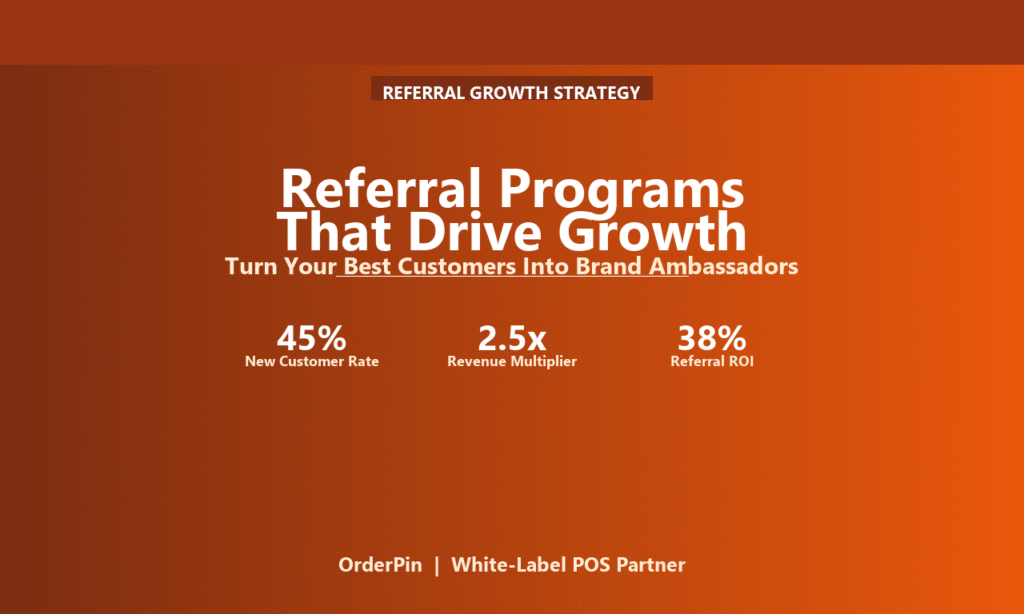
Most ISOs spend the majority of their acquisition budget on outbound activities — cold calls, trade shows, vendor lists, digital ads. Yet the highest-quality merchants in their portfolio almost always came through a referral. The gap between how ISOs acquire merchants and where their best merchants actually come from is one of the most glaring inefficiencies in the industry.
Why Referrals Still Win
Referrals have been the top source of B2B leads for decades — and for good reason. The trust transfer from a known peer eliminates the entire trust-building phase that every outbound effort must pay for.
The Referral Architecture
A referral program is not just asking happy merchants to send business your way. It is a structured system with five components that must all be present for the engine to work.
Do not ask unhappy or neutral merchants to refer. Only those who are genuinely enthusiastic will produce referrals that convert.
Provide a ready-made referral template, a direct contact method, and a clear next step. The easier it is, the more often it happens.
A month of free service, a hardware discount, or a cash rebate — shared between referrer and referred merchant creates mutual enthusiasm.
Every referral must be followed up within 48 hours. A referral that goes cold is a wasted opportunity and a message to the referrer that you do not value their network.
Even if the referred prospect does not convert, thank the referrer sincerely. This keeps the relationship warm for the next referral.
The Referral Incentive Design
Incentive design is where most referral programs fail. The wrong incentive creates awkwardness without action. The right incentive creates enthusiasm and a genuine desire to help.
- Cash or rebate: $100-300 paid within 30 days of activation
- Free month of SaaS: tangible, immediate value
- Hardware discount: 10-15% off for referred merchant and referrer
- Charity donation: in the merchant’s name — especially effective for community-oriented owners
- Vague promises: “We will take good care of them” — not a reward
- Complex processes: if it takes more than 5 minutes to refer, most merchants will not bother
- Delayed rewards: a gift card that arrives 6 months later has no motivational impact
- Requiring the referred to sign first: reward the referral intent, not just the signed contract
Measuring and Scaling the Referral Engine
What gets measured gets managed. Here are the four metrics every ISO should track for their referral program, along with benchmark targets.
| Metric | How to Measure | Benchmark Target |
|---|---|---|
| Referral Rate | % of active merchants who refer at least one merchant per year | 15-20% |
| Referral Conversion Rate | % of referral conversations that result in a signed merchant | 40-60% |
| Referral Merchant Quality | Average retained revenue of referred merchants at 12 and 24 months | +30% vs outbound |
| Referral CAC vs Outbound CAC | All-in acquisition cost for referred merchants vs outbound-prospected merchants | 60-80% lower |