
TL;DR — Quick Summary
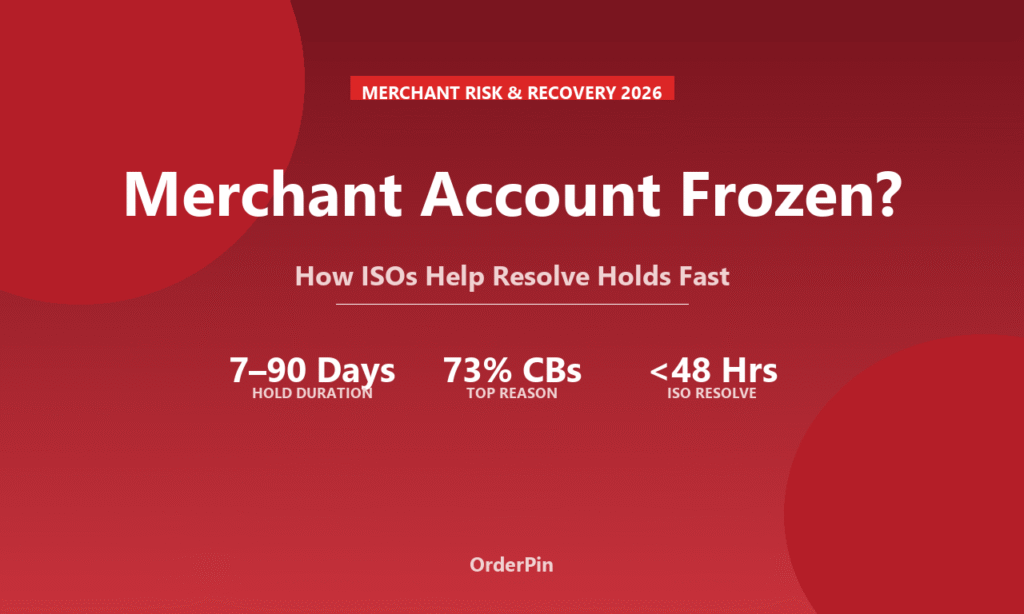
- Merchant account freezes last 7–90 days and 73% are triggered by chargeback spikes, excessive declines, or AML/KYC red flags — not fraud, as most merchants assume.
- The fastest path to release is providing 6–18 months of clean bank statements, a detailed processing history, and a remediation plan within 48 hours of the freeze notice.
- ISOs who proactively monitor merchant risk signals can prevent 60–80% of freezes before they happen — protecting both residual income and merchant relationships.
The phone call comes in at 9 AM. A merchant is panicking. Their processor just put a “hard hold” on their account — $40,000 in pending settlements is frozen, customer cards are declining, and the processor will not give a clear timeline for release. This scenario plays out thousands of times a year in the U.S. merchant services industry. Most merchants — and many ISOs — handle it badly. This playbook is designed to change that.
1. Why Merchant Accounts Get Frozen
There is a wide gap between what merchants think causes a freeze and what actually does. Most merchants believe processors freeze accounts because of fraud. In reality, fraud is only the third most common cause.
| Rank | Freeze Trigger | % of Cases | Typical Duration |
|---|---|---|---|
| 1 | Chargeback spike (CB rate > 1%) | 38% | 30–90 days |
| 2 | Excessive declines (>15%) | 22% | 14–45 days |
| 3 | AML/KYC mismatch | 18% | 21–60 days |
| 4 | MCC/vertical mismatch | 11% | 7–30 days |
| 5 | Suspected fraud / chargeback fraud | 11% | 60–180 days |
2. The First 48 Hours: What to Do
The first 48 hours after a freeze notice determine whether the merchant is back processing in two weeks or two months. Speed and documentation matter more than anything else.
- Hour 0–2: Get the freeze reason in writing. The processor’s risk team must specify which transaction, customer, or pattern triggered the hold. Verbal explanations are worthless — request a formal letter.
- Hour 2–8: Pull the merchant’s last 6 months of processing statements. Identify the spike date and the suspected transaction(s). Most freezes are triggered by a specific incident, not a slow trend.
- Hour 8–24: Gather supporting documents: bank statements (showing the merchant can cover chargebacks), shipment tracking for high-value orders, customer service logs, refund policies, and any prior chargeback responses.
- Hour 24–48: Submit a written remediation plan that includes: (1) acknowledgment of the issue, (2) root cause, (3) corrective action, (4) future prevention. Processors respond to structured plans, not denials.
3. Common Freeze Triggers and How to Resolve Each
Each freeze trigger has a different resolution path. Treating them all the same way is the most common mistake ISOs make.
| Trigger | What the Processor Wants | Resolution Time |
|---|---|---|
| Chargeback spike | CB remediation plan + reserve increase | 30–60 days |
| Excessive declines | Updated fraud filter rules + AVS settings | 14–30 days |
| AML/KYC mismatch | Updated beneficial owner info + ID docs | 21–45 days |
| MCC mismatch | Re-underwriting under correct MCC | 7–21 days |
| Suspected fraud | Full audit + law enforcement clearance | 60–180 days |
4. The Reserve Account Reality
Most freezes end with a reserve account. Processors will hold back 5–25% of every transaction for 90–180 days to cover potential chargebacks. For a merchant doing $50K/month, a 15% reserve means $7,500/month in float — a significant cash flow hit. Negotiating the reserve percentage and release schedule is one of the most valuable things an experienced ISO can do for a frozen merchant.
5. How ISOs Can Prevent Freezes Proactively
The best freeze is the one that never happens. ISOs who monitor their merchant portfolio for risk signals can intervene weeks before the processor pulls the trigger.
- Weekly chargeback monitoring: Any merchant above 0.5% CB rate should trigger a coaching conversation. Most merchants do not even know their CB rate.
- Decline rate alerts: Excessive declines (above 10–15%) usually indicate fraud filter misconfiguration. This is fixable in a day if caught early.
- Volume spike detection: A merchant whose volume suddenly jumps 3x in a week is either scaling fast (good) or compromised by a fraud ring (bad). Either way, you need to know.
- Vertical risk profiling: Supplements, CBD, adult, travel, and high-ticket electronics all carry elevated freeze risk. New merchants in these verticals deserve closer monitoring for the first 90 days.
- Annual KYC refresh: Beneficial ownership changes, address changes, and business model pivots all need to be reported to the sponsor bank. Letting these drift is a freeze trigger.
6. The OrderPin Risk Monitoring Layer
White-label platforms like OrderPin now include built-in chargeback alerts, fraud scoring, and reserve monitoring. ISOs who deploy these tools see 60–80% fewer surprise freezes in their portfolio — and far fewer panicked phone calls from merchants on a Monday morning.
The OrderPin Risk Advantage
- Real-time chargeback rate tracking per merchant
- Automated alerts when merchants cross risk thresholds
- Built-in fraud filter templates for high-risk verticals
- Annual KYC refresh workflows built into the ISO dashboard
Bottom Line
A merchant account freeze is not a death sentence — it is a risk event that requires immediate, structured response. Merchants who wait, deny, or panic lose weeks or months of revenue. Merchants (or ISOs) who move fast, document everything, and submit a clear remediation plan are usually back processing within 30 days.
For ISOs, the opportunity is bigger than recovery. The ISOs who build freeze-prevention into their merchant onboarding and ongoing monitoring become irreplaceable advisors — and earn residuals on accounts that would otherwise have been terminated by the sponsor bank.
📊 Data sources: Visa Global Merchant Acquirer Risk Standards 2025, Mastercard Merchant Monitoring Program Guide 2025, Nilson Report chargeback trends 2025, Federal Reserve payments risk study 2025, ISO risk manager surveys 2025.