
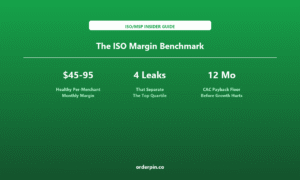

The ISO Margin Benchmark: What Healthy Per-Merchant Margin Looks Like
Most ISOs can calculate their margin but have no idea whether it is good. This benchmark gives per-merchant monthly gross margin as a range by portfolio size, vertical, and merchant tenure – the four leaks that separate top-quartile books from the rest, and the floor below which growth destroys value instead of creating it.

Why Merchant Confidence Matters More Than Merchant Satisfaction
Satisfaction measures the happy path; confidence measures trust under stress. Merchants rarely leave because they are dissatisfied – they leave because they lose confidence after an outage, a dispute, or inconsistent service. This article argues for managing confidence: reliability, business continuity, service consistency, and how you behave during an incident.

Are ISO Sales Models Due for a Redesign? From Agent Armies to Modern Go-to-Market
Most ISOs still sell the way the industry sold twenty years ago: large 1099 agent networks paid on signed volume. Team selling, hybrid direct-plus-partner models, and partner-led growth are proving more durable. This article maps the redesign – what to keep, what to retire, and what to build first.
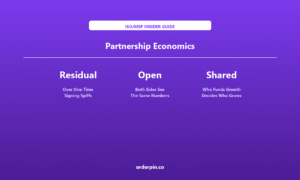
Partnership Economics: How the Best ISO Partnerships Structure the Money
Partnerships die over money. The best ones make the split explicit and aligned – residual share over one-time spiffs, transparency into the economics, joint investment in growth, and incentives that pay partners on the outcomes that matter. This article covers the commercial architecture of a partnership: how the deal is built, not whether it is worth keeping.

Why Merchant Education Is the Most Underrated Growth Channel for ISOs
Educated merchants are more loyal merchants. Business reviews, industry benchmarks, and operational guidance turn an ISO from vendor into advisor – building trust that compounds into retention and referrals at near-zero acquisition cost. This article reframes education as a growth channel rather than a support function.
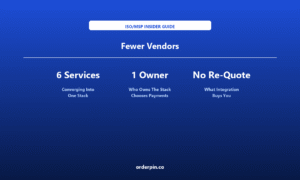
The Rise of the Multi-Service Merchant: Why Merchants Want Fewer Vendors
Merchants are consolidating vendors – payments, payroll, POS, online ordering, loyalty, and business financing are converging into one integrated stack. ISOs that sell only payments get displaced from the relationship; ISOs that become the integrated provider own it. This article covers the multi-service demand shift and the expansion roadmap for ISOs.
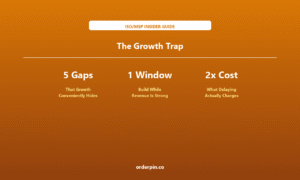
The Growth Trap: Why ISO Owners Under-Invest in Infrastructure When Times Are Good
Growth hides weakness. During boom years ISOs lean on sales, skip systems, and let documentation and process rot – then discover the bill when acquisition slows. This article maps the five infrastructure gaps that growth disguises (operations, systems, documentation, sales dependency, scaling) and argues the right time to build is before you need it.

Why Some Merchant Portfolios Age Better Than Others
Two ISOs with the same volume can have radically different books five years later. Durability comes from composition – industry mix, merchant longevity, economic resilience, technology adoption, and retention patterns – not from size. This article explains portfolio aging and how to steer the mix toward merchants that last, feeding directly into exit value.

What Makes an ISO Attractive to Partners – and How to Become the Partner of Choice
The best ISOs are chosen, not choosers. When banks, ISVs, and vertical software vendors decide which ISO to partner with, they screen on reputation, merchant quality, technology adoption, support standards, and growth potential. This article inverts the partnership lens: how to build a partner-ready profile so the strongest partners come to you.