
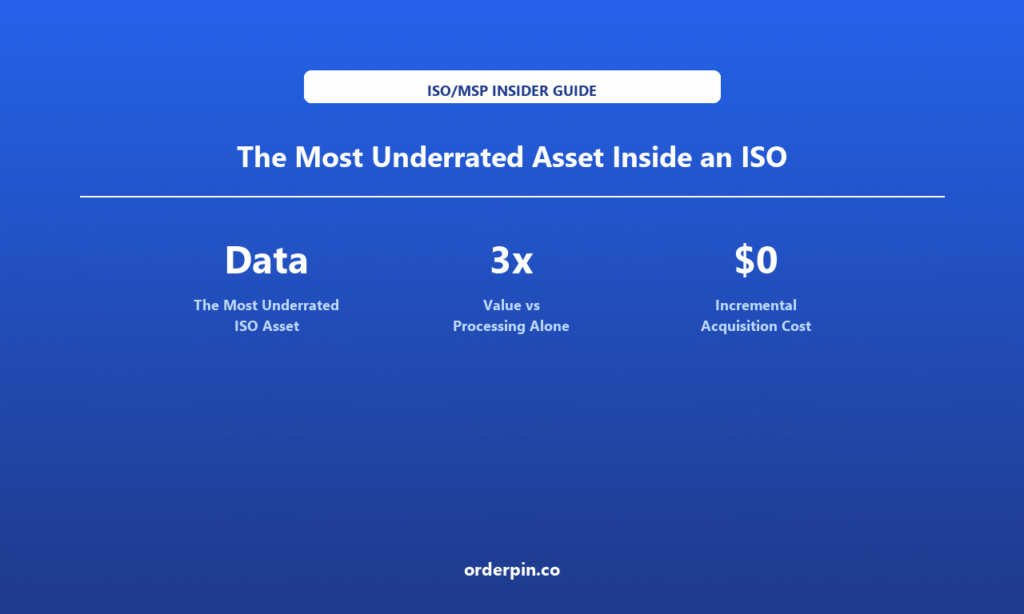
TL;DR — Quick Summary
- The most underrated asset in a payments business is not the technology — it is the distribution network: After years of building merchant relationships, agent networks, and community knowledge, most ISOs have assembled an asset that took a decade to accumulate and cannot be bought or replicated quickly. Yet most treat it as infrastructure rather than inventory: something to maintain, not to monetize. The question is not whether the network is valuable. It is why so few ISOs are actually using it.
- Two types of underrated assets live inside every mature ISO: The Agent Network — the collection of sub-ISOs, referral partners, and ISO agents who sell under your brand — is a distribution force that took years to recruit, train, and motivate. The Merchant Relationships and Operational Knowledge accumulated from serving thousands of merchants over years produces patterns that predict merchant needs, identify risk, and generate advisory revenue. Both assets are sitting largely unused in most books, while ISOs invest in acquiring new merchants at full cost.
- Extracting more value from existing assets is the highest-return move an ISO can make: Serving existing merchant networks with more products, deepening referral networks with structured programs, and monetizing accumulated knowledge through advisory services all cost a fraction of new merchant acquisition. The ISOs that understand what they already own outperform those that keep buying what they could be building.
ISO Asset
Processing Alone
Acquisition Cost
What Is Actually the Most Underrated Asset in a Payments Business
Ask an ISO owner what their most valuable asset is and the answers usually come back to one of three: their processing book, their technology platform, or their bank relationships. All three are real assets — but none of them is the one that took the longest to build or is hardest to replicate. That distinction belongs to the distribution network: the agent relationships, merchant relationships, and accumulated knowledge that took years to accumulate and cannot be assembled in a twelve-month sprint.
Most ISOs treat this distribution network as infrastructure — the plumbing that moves the business forward — rather than as the asset it actually is. They invest in acquiring new merchants while leaving enormous value untouched in the relationships and knowledge they already have. The reframing is simple but powerful: the network is not overhead. It is inventory. And inventory, used well, generates revenue at a fraction of the cost of new acquisition.
This article identifies the two types of underrated assets inside every mature ISO — the Agent Network and the accumulated Merchant Knowledge — and explains how each can be monetized more aggressively. The ISOs that figure this out will compound faster than those that keep buying what they could be building.
Over a Decade
Processing Revenue Alone
Monetize Existing Assets
Not Just Infrastructure
1. The Agent Network: The Distribution Force ISOs Have Been Underusing
The agent network is a distribution asset most ISOs treat as overhead: Most ISOs with a mature book also have a collection of sub-ISOs, referral partners, and ISO agents who sell under their brand. Recruiting, training, and motivating this network took years. It is the result of dozens of relationships, dozens of deals done, and dozens of conversations about how to make the partnership work. Yet most ISOs treat this network as a passive channel — sending them product updates and hoping they sell — rather than actively expanding what they sell, who they sell to, and how they are compensated.
Expanding the agent network’s scope is the highest-ROI expansion move: Adding a new product to an existing agent’s book costs almost nothing — the relationship already exists, the trust is already built, and the agent already knows how to present the ISO’s offerings. Expanding from processing-only to white-label POS, merchant analytics, or embedded finance products through the existing agent network is a fraction of the cost of recruiting new agents for those products. The question is not whether the agent network has capacity. It is whether the ISO has given it something worth selling.
2. Merchant Relationships and Operational Knowledge: The Asset That Predicts Value
Years of serving merchants produce patterns that have commercial value: After serving thousands of merchants across multiple industries and geographies, a mature ISO has accumulated a body of operational knowledge that predicts what merchants need before they ask, identifies risk before it materializes, and generates advisory revenue from the trust built over years. This knowledge is not in a database — it lives in the organization’s experience. Most ISOs are not treating it as an asset to be productized and sold.
Merchant knowledge turns advisory conversations into revenue: An ISO that knows its merchant base — seasonal patterns, cash flow cycles, staffing rhythms — can turn routine check-ins into business reviews that merchants pay for. The data and context accumulated over years of service is what makes an ISO an advisory partner rather than a vendor. Advisory revenue is recurring, relationship-deepening, and churn-reducing — and it is available to any ISO willing to invest in making use of what it already knows.
3. Why Most ISOs Are Leaving Asset Value on the Table
The asset that is hardest to measure gets the least attention: The distribution network — agent relationships, merchant knowledge, community trust — is the most valuable and least quantified asset in a payments business. Processing volume is easy to measure, which is why ISOs track it obsessively. The network is harder to quantify, which is why it is managed loosely. But easy-to-measure does not mean most valuable. The gap between what ISOs track and what they own is where most of the undermonetization lives.
The fix is systematic — not a one-time project: Extracting more value from the network requires treating it like inventory: tracking what agents sell and to whom, measuring merchant penetration by product, running programs that expand scope rather than just maintain status quo. The ISOs that systematize this process — with regular agent reviews, merchant penetration reports, and structured programs to cross-sell — generate multiples more revenue from the same base than those that manage the network casually.
4. How to Systematically Monetize the Network Asset
Expand the agent network’s product scope first: The cheapest revenue expansion is selling more to existing agents. Add white-label POS, reporting tools, or merchant analytics to the product lineup and introduce them through the existing distribution network. The agents already trust the ISO; the merchants already know the brand. The incremental cost of the expansion is almost entirely product — the distribution is already paid for.
Productize merchant knowledge into advisory services: The operational patterns an ISO has accumulated — industry benchmarks, cash flow models, staffing ratios — can be turned into benchmark reports, business reviews, and advisory subscriptions. These are recurring revenue products that deepen the merchant relationship, raise switching costs, and generate income from what the ISO already knows. The cost of production is research and packaging; the distribution is the existing merchant base.
5. The Compounding Logic of Network Monetization
Network monetization compounds because the asset grows with use: Every time an agent sells a new product to an existing merchant, the merchant’s relationship with the ISO deepens, their switching cost rises, and their lifetime value increases. The network becomes more valuable as it is used — not diluted. This is the opposite of most business investments, which show diminishing returns. A well-monetized network becomes more durable and more profitable with every additional product sold through it.
The ISO that learns to use what it already has will outcompete the one that keeps buying: Acquisition at full cost is necessary but not sufficient. The ISOs that compound fastest are the ones that extract more value from their existing distribution network while continuing to grow it. That means treating the agent network and accumulated merchant knowledge as the primary growth levers — not the processing volume. The asset is already built. The question is what it is worth if used more deliberately.
Underrated vs Overrated ISO Assets
| Asset Type | Underrated (Network Asset) | Overrated (Processing Asset) |
|---|---|---|
| Build Time | 10+ years to replicate | 1-2 years |
| Replicability | Extremely difficult | Relatively easy |
| Monetization Focus | Undermonetized | Intensely tracked |
| Growth Leverage | Expands existing network | New acquisition only |
| Compounding Effect | Increases with use | Flat or declining |
| Best Strategy | Monetize more deliberately | Defend and optimize |
How OrderPin Lets ISOs Monetize Their Distribution Network More Aggressively
OrderPin is a white-label POS platform that turns an ISO’s existing distribution network into a multi-product asset. When your merchants run on your white-label platform, every agent in your network becomes a platform seller, every merchant becomes a multi-product customer, and the switching cost that comes from owning the software deepens the network’s value with every additional product sold.
- Expands what agents can sell: OrderPin lets you add white-label POS to your product lineup and distribute it through your existing agent network at minimal incremental cost. The relationship is built; the incremental product cost is what you are adding.
- Deepens merchant relationships into multi-product accounts: When merchants run on your platform, you can cross-sell reporting, analytics, and advisory services using the trust and data you already have — at a fraction of the cost of acquiring a new merchant for each product.
- Builds the compounding network effect: Every additional product sold through your platform makes your merchant base stickier and your agent network more valuable. OrderPin runs under your brand, so the compounding network belongs to you, not a vendor’s.
- Makes the network asset visible: Portfolio data from OrderPin shows you exactly which agents are selling what, which merchants have adopted which products, and where the expansion opportunity is — turning the network from informal knowledge into a quantified growth lever.
Frequently Asked Questions
What is the most underrated asset inside an ISO?
The distribution network — the agent relationships, merchant relationships, and accumulated operational knowledge — built over years and extremely difficult to replicate. Most ISOs treat it as infrastructure rather than as inventory: something to maintain, not to monetize. Yet it is the asset that took longest to build and is hardest to copy.
What is the Agent Network and how does it create value?
The Agent Network is the collection of sub-ISOs, referral partners, and agents who sell under the ISO’s brand. It took years to recruit, train, and motivate. Adding new products to this network — white-label POS, analytics, advisory services — costs almost nothing because the relationships and trust are already built. The distribution is already paid for; the incremental revenue is pure upside.
How does merchant knowledge become a revenue product?
Years of serving thousands of merchants produces patterns — seasonal rhythms, cash flow cycles, staffing ratios, industry benchmarks — that have commercial value. An ISO can productize this knowledge into benchmark reports, business reviews, and advisory subscriptions that merchants pay for. The cost of production is research and packaging; the distribution is the existing merchant base the ISO already serves.
Why are most ISOs undermonetizing their network?
Because the network asset is hard to measure and easy to overlook. Processing volume is easy to track, which is why ISOs focus on it. The network’s value — in agent relationships, merchant knowledge, and community trust — is harder to quantify, which is why it is managed loosely. But easy-to-measure does not mean most valuable. The gap between what ISOs track and what they own is where the undermonetization lives.
What is the highest-ROI expansion move for a mature ISO?
Expanding what the existing agent network sells. Adding white-label POS, analytics, or advisory services to an agent’s existing book costs almost nothing — the relationship, the trust, and the distribution are already built. The incremental cost is entirely product; the distribution is already paid for. That is the highest return expansion move available to any ISO with a mature distribution network.
How does network monetization create a compounding effect?
Every additional product sold through the network deepens the merchant relationship, raises switching costs, and increases the merchant’s lifetime value. The network becomes more durable and more valuable as it is used — the opposite of most assets, which show diminishing returns. A well-monetized network compounds: more products sold through it makes the next sale easier and the next product stickier.
The most valuable asset in a payments business is not the one that is easiest to measure. It is the distribution network — the agent relationships, merchant relationships, and accumulated knowledge — built over a decade and impossible to replicate in twelve months. Most ISOs are undermonetizing this asset while investing in new merchant acquisition at full cost. The highest-return move is to expand what the existing network sells: add products, deepen merchant penetration, and productize accumulated knowledge into advisory revenue. The network grows more valuable as it is used. OrderPin is a white-label POS platform that turns an ISO’s existing distribution network into a multi-product asset — giving agents more to sell, merchants more to use, and the ISO a compounding network that belongs to its brand.
About OrderPin
OrderPin is a white-label POS platform built for ISO and MSP partners. We offer full data ownership, flexible pricing, and seamless API integrations to help you build a recurring revenue business under your own brand. Learn more about OrderPin’s white-label solution