ISO Guide

An Independent Sales Organization (ISO) is a third-party company authorized by acquiring banks and payment processors to market, sell, and manage merchant services, such as credit card processing and point-of-sale (POS) systems. They act as intermediaries, enabling businesses to accept payments and offering tailored support, often for higher-volume merchants.

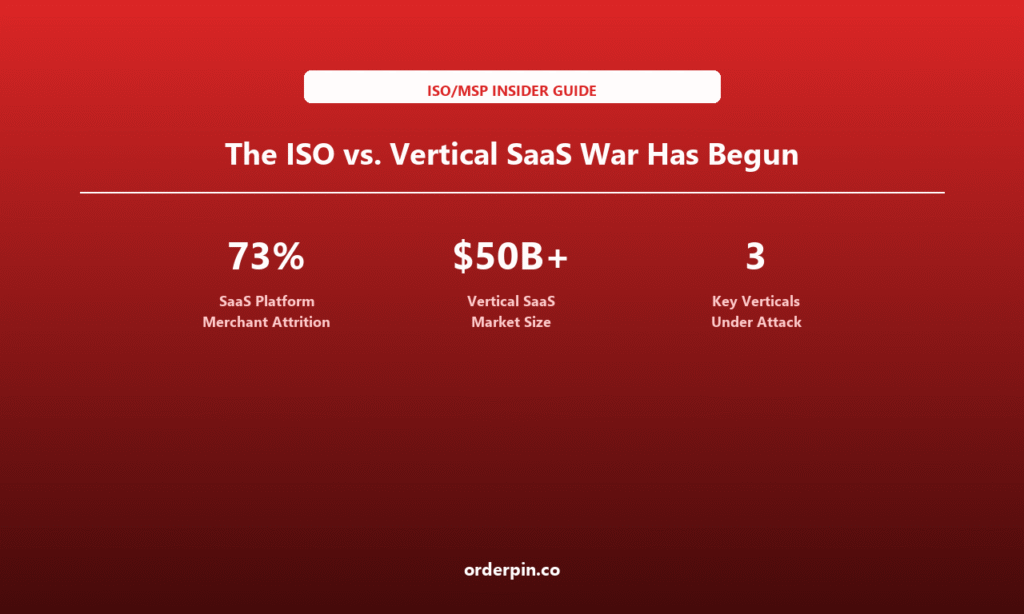
The ISO vs. Vertical SaaS War Has Begun: Restaurants, Healthcare, Auto Repair

TL;DR — Quick Summary Vertical SaaS is not coming — it has arrived: Toast has reshaped restaurant POS, Jane App dominates therapist and health provider scheduling, ShopWare has scaled across auto repair shops. These platforms do not compete on payment rates; they compete on workflow ownership, and they are systematically replacing the merchant relationships ISOs …

The ISO vs. Vertical SaaS War Has Begun: Restaurants, Healthcare, Auto Repair Read More »
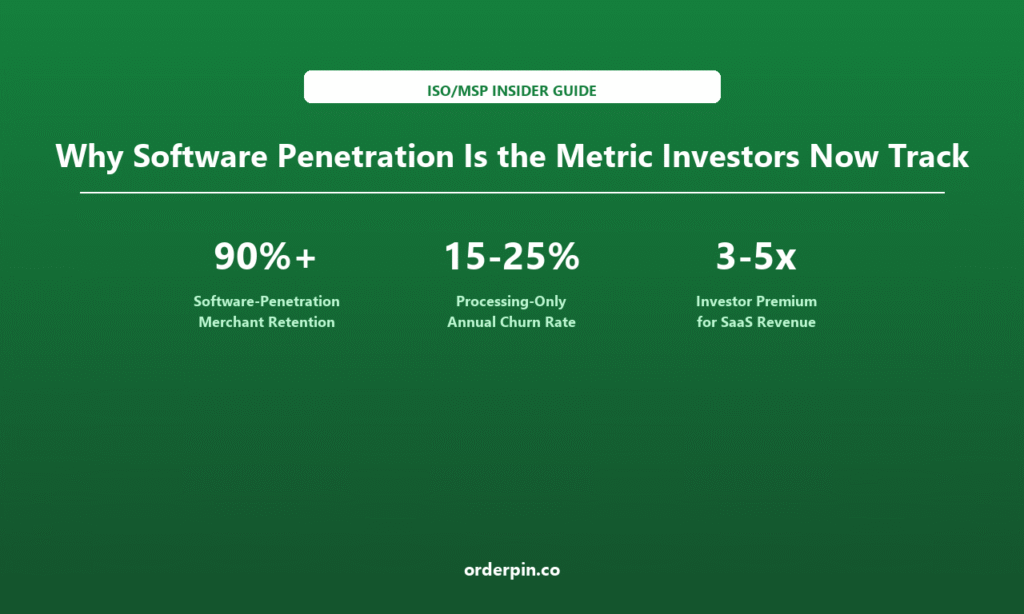
Why Software Penetration — Not Processing Volume — Is the Portfolio Metric Investors Now Track

TL;DR — Quick Summary Investors no longer buy volume: Raw processing volume — total transaction dollars — tells you very little about the quality, durability, or defensibility of an ISO portfolio. Two ISOs with identical monthly volume can have radically different risk profiles, growth trajectories, and exit values. One is a platform business; the other …

Why Software Penetration — Not Processing Volume — Is the Portfolio Metric Investors Now Track Read More »

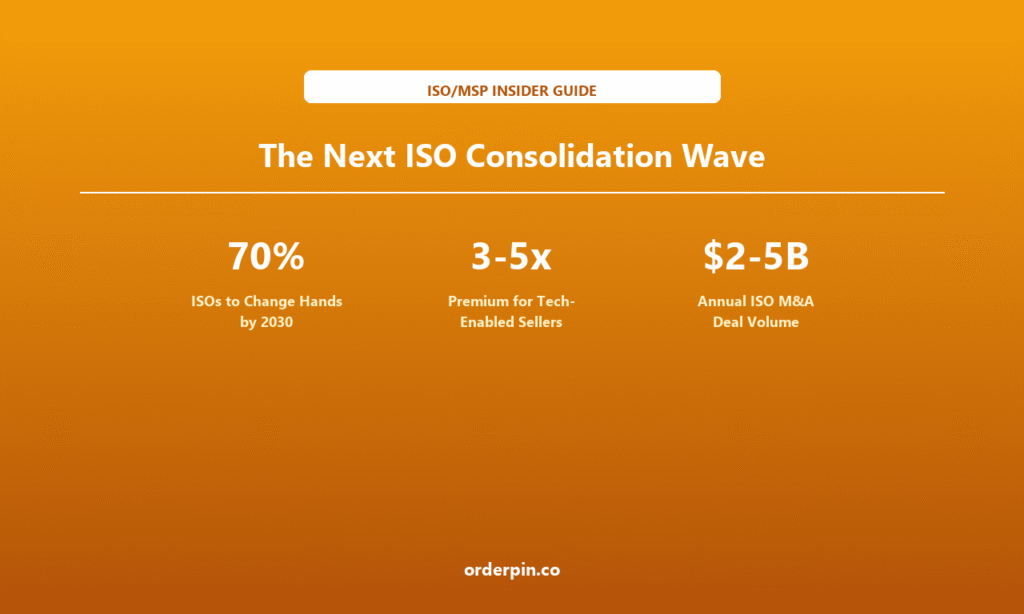
The Next ISO Consolidation Wave: Who Gets Acquired, Who Gets Left Behind

TL;DR — Quick Summary The next consolidation wave is technology-driven, not volume-driven: In previous waves, acquirers paid for merchant count and processing volume. In this one, they pay for platforms, software penetration, and proprietary data. An ISO with 5,000 merchants on its own software commands a higher price than an ISO with 20,000 merchants it …

The Next ISO Consolidation Wave: Who Gets Acquired, Who Gets Left Behind Read More »

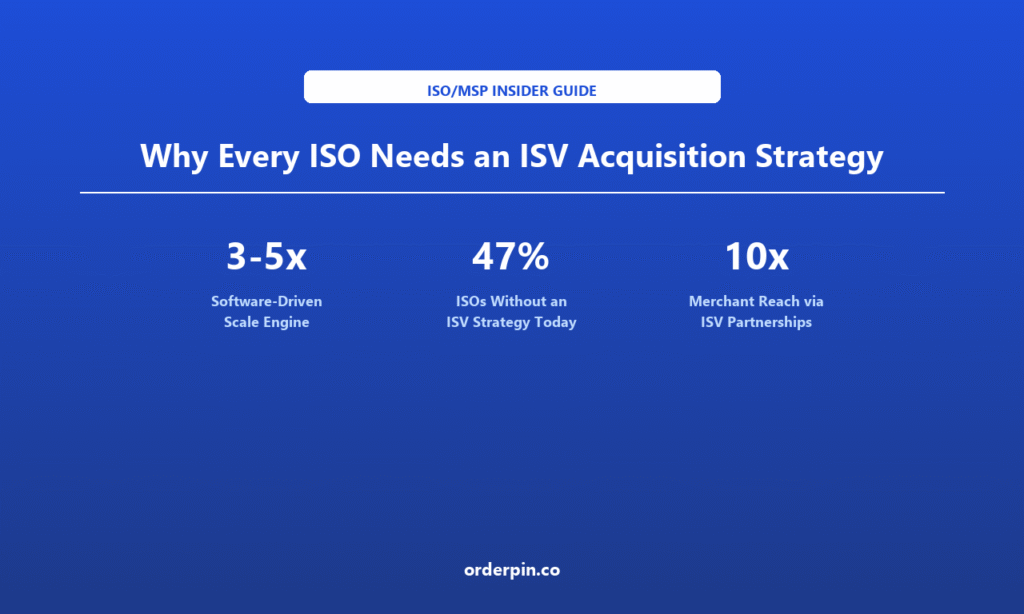
Why Every ISO Needs an ISV Acquisition (or Partnership) Strategy

TL;DR — Quick Summary ISVs are now the single most efficient merchant acquisition channel in payments: Independent software vendors — the companies that build the operational software merchants actually use every day — sit between ISOs and the merchants they want. An ISV that embeds payments into its software acquires merchants at a fraction of …

Why Every ISO Needs an ISV Acquisition (or Partnership) Strategy Read More »

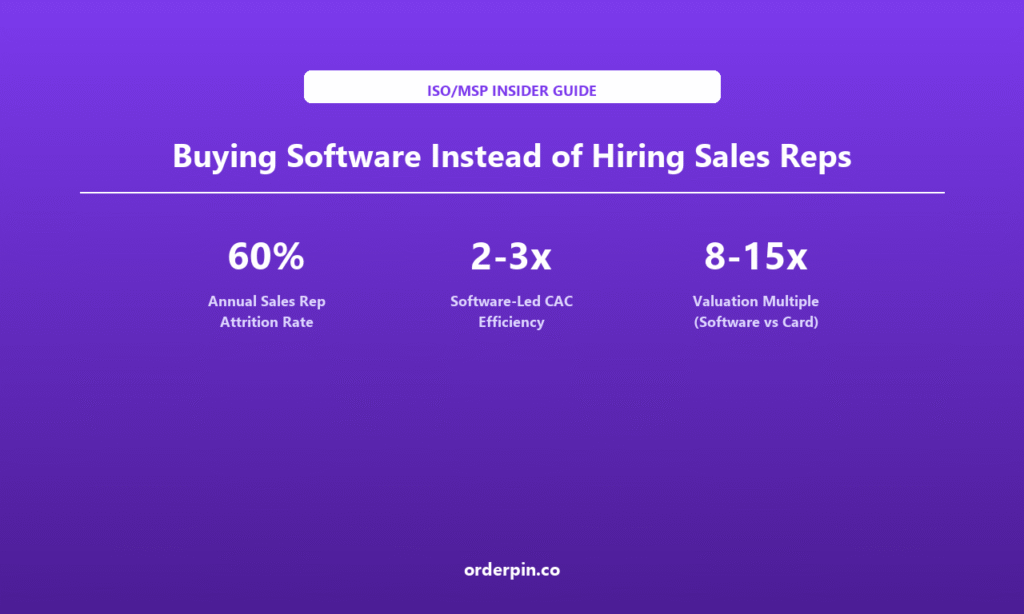
Why Smart ISOs Are Buying Software Companies Instead of Hiring More Sales Reps

TL;DR — Quick Summary The sales-rep growth model has hit a wall: Every additional rep adds linear cost and linear revenue, but also carries 40-60% annual attrition, 6-12 month ramp time, and a customer acquisition cost that rises as the easy prospects get exhausted. At a certain scale, adding reps stops improving unit economics — …

Why Smart ISOs Are Buying Software Companies Instead of Hiring More Sales Reps Read More »

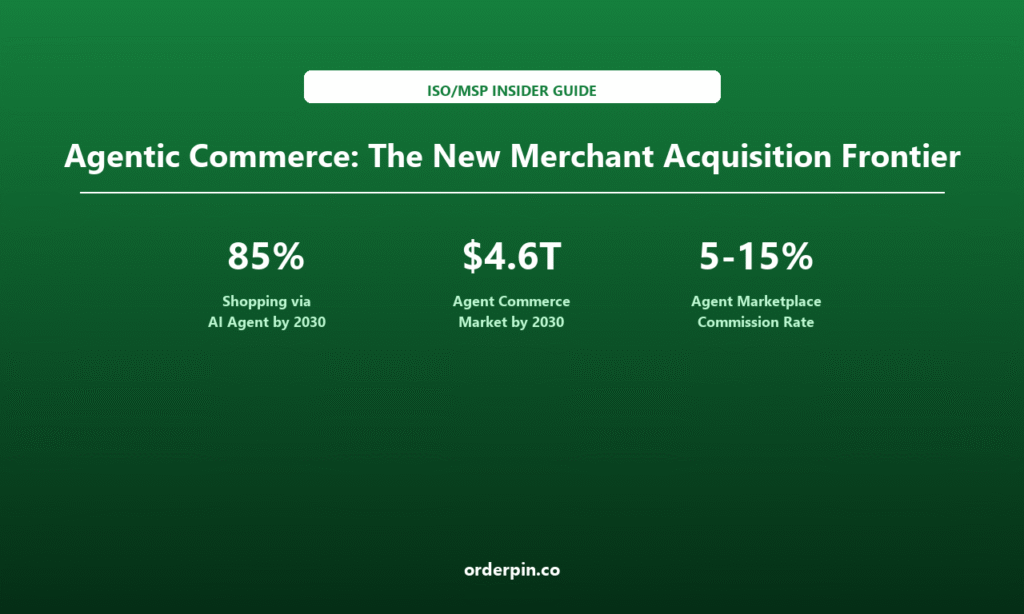
Agentic Commerce: How AI Agents Could Bypass Your Entire Merchant Acquisition Funnel

TL;DR — Quick Summary Agentic commerce is not theoretical — it is already happening: AI agents are actively purchasing on behalf of consumers today. Travel agents, shopping bots, subscription managers, and expense automation tools are all AI agents that make purchasing decisions autonomously. The volume is already in the billions annually — and it is …

Agentic Commerce: How AI Agents Could Bypass Your Entire Merchant Acquisition Funnel Read More »

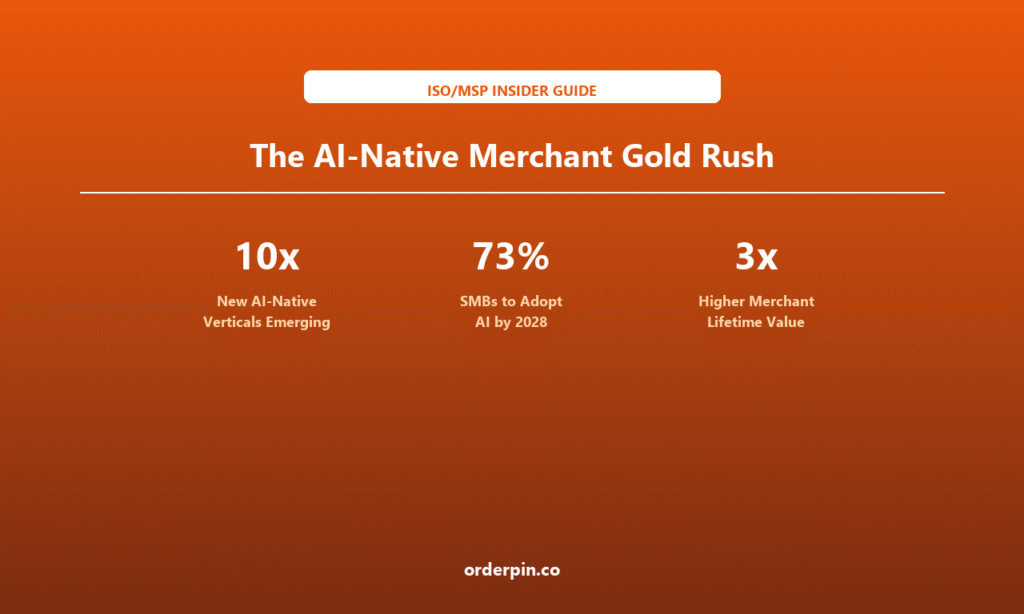
The AI-Native Merchant Gold Rush: New Business Models Your ISO Isn’t Built to Serve

TL;DR — Quick Summary AI-native businesses have payment needs that traditional merchant services cannot serve: High-frequency micro-transactions, subscription billing, AI agent settlement, and usage-based models are structurally different from traditional card-present or card-not-present transactions. A payment product built for a restaurant or retail store cannot serve an AI SaaS company billing per API call. The …

The AI-Native Merchant Gold Rush: New Business Models Your ISO Isn’t Built to Serve Read More »

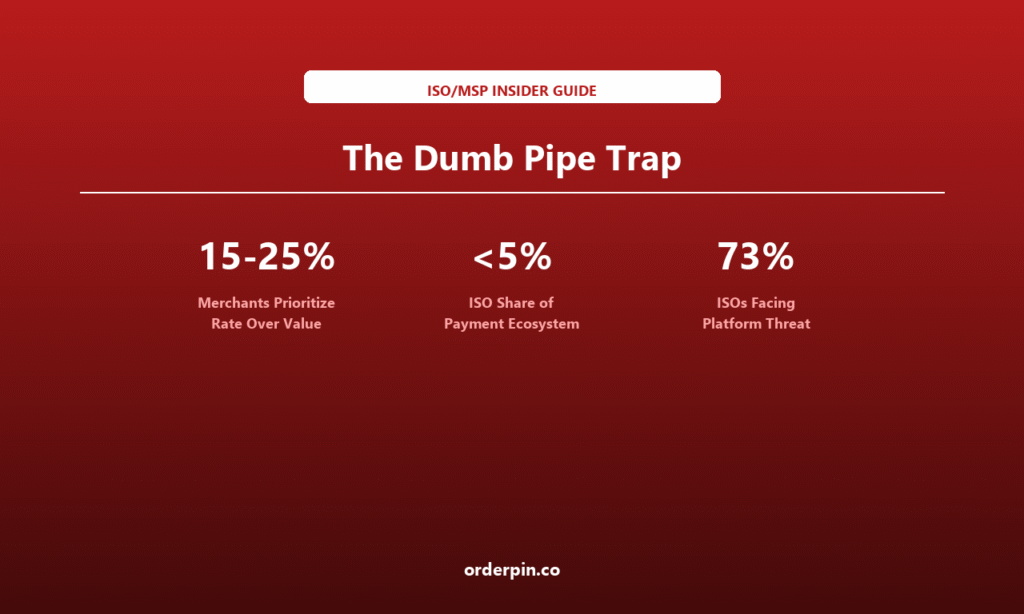
The Dumb Pipe Trap: Why ISOs Are Being Pushed Into Utility Status

TL;DR — Quick Summary The payment ecosystem is structurally biased against ISOs at the margin layer: ISOs earn the residual — what’s left after networks, issuers, and processors have taken theirs. This makes ISO margin inherently thin and inherently compressible. The business model is not broken; it is structurally designed this way. Understanding this is …

The Dumb Pipe Trap: Why ISOs Are Being Pushed Into Utility Status Read More »

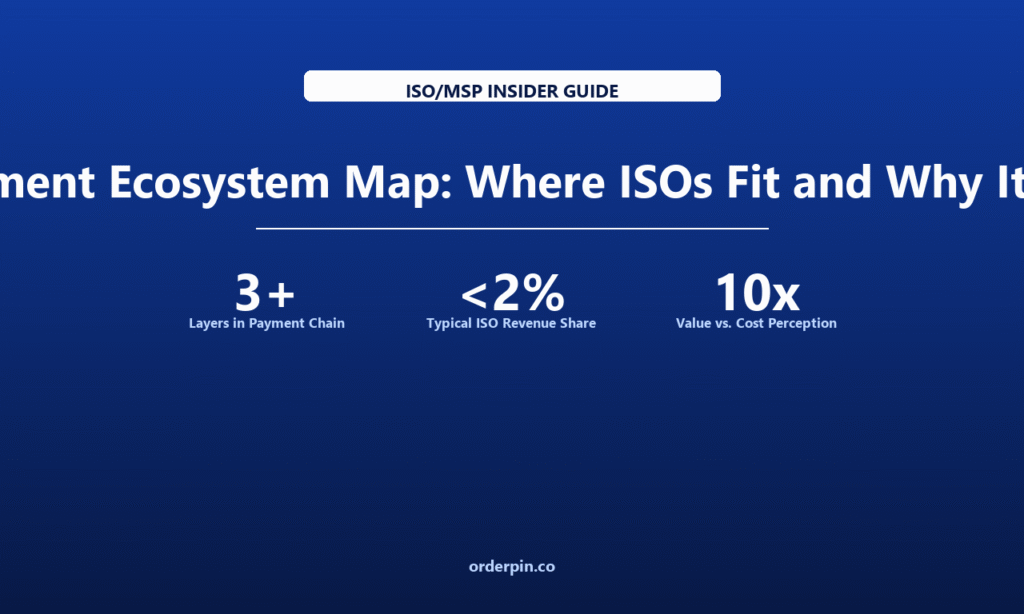
The Payment Ecosystem Map: Where ISOs Fit and Why Their Position Is Both Fragile and Essential

TL;DR — Quick Summary The payment ecosystem has four distinct layers with very different economics: Card networks (Visa, Mastercard) set the rules and take roughly 1-2% of every transaction. Issuers (banks that issue cards to consumers) take another 1-2%. Acquirers and processors take a smaller slice. ISOs operate in the merchant-facing layer — the most …

The Payment Ecosystem Map: Where ISOs Fit and Why Their Position Is Both Fragile and Essential Read More »

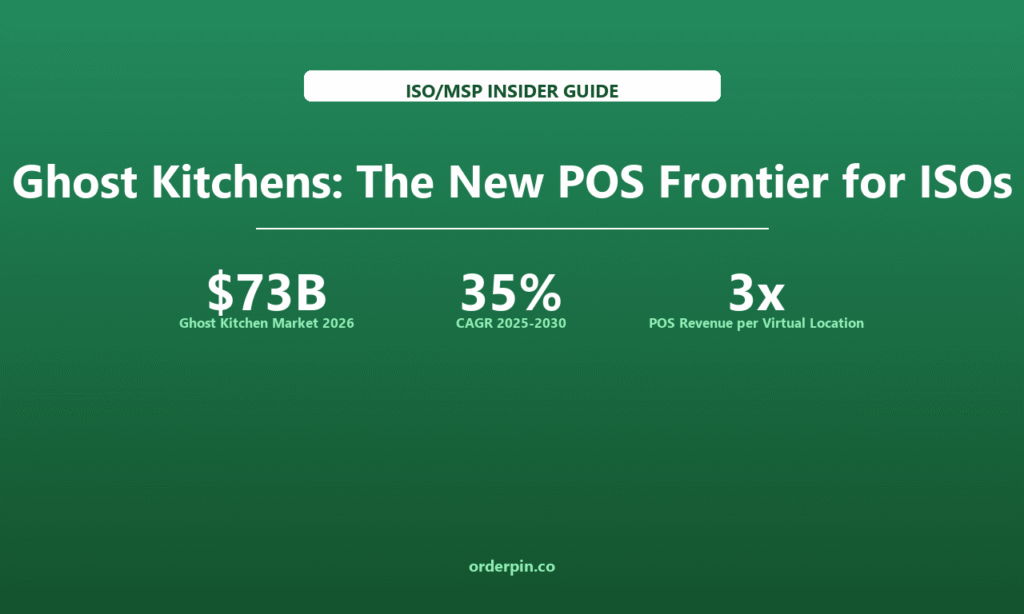
The Ghost Economy: How New Restaurant Business Models Are Creating New POS Opportunities for ISOs

TL;DR — Quick Summary Ghost kitchens and virtual restaurants are a $73B market growing at 35% CAGR: Delivery-only concepts — brands with no front-of-house, operating from shared kitchen spaces — are one of the fastest-growing restaurant segments. They are not a pandemic quirk; they are a durable structural shift in how food reaches consumers. Ghost …

The Ghost Economy: How New Restaurant Business Models Are Creating New POS Opportunities for ISOs Read More »

Scroll to Top